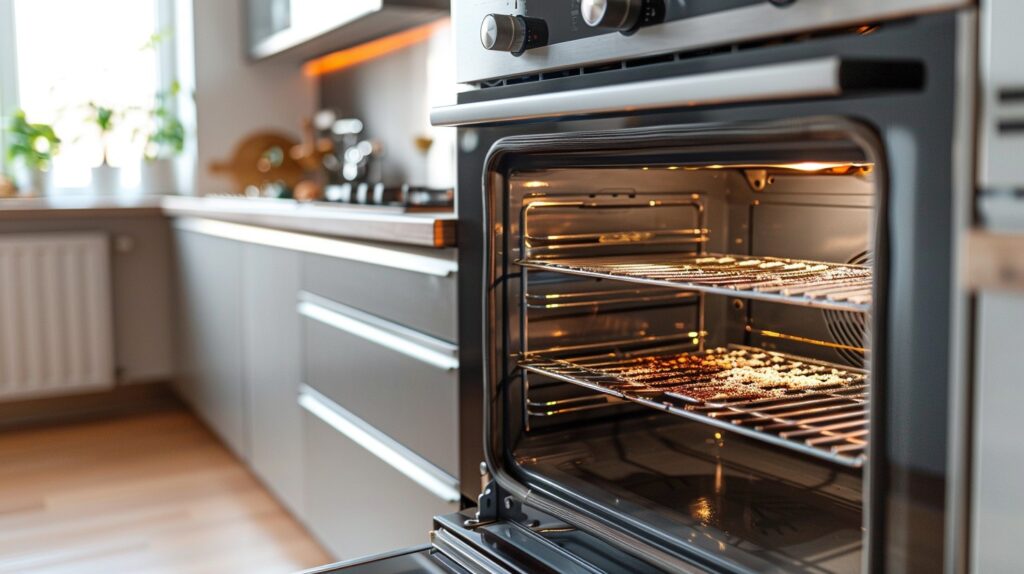
You open the oven door to preheat for dinner and there they are – your oven racks, looking like they’ve been through a small geological event. Layers of carbonized grease, fossilized cheese drips, and the ghostly remnants of a roast that got a little out of hand sometime around the holidays. The question on your mind is a reasonable one: can I actually get this off without a self-clean cycle? Not only can you – you often get better results without one. The self-clean function bakes residue into a fine ash that still needs wiping, cranks your kitchen to uncomfortable temperatures, and has been known to trip thermal fuses on older appliances. The manual methods covered below cost almost nothing, use supplies you already own, and leave your racks genuinely clean rather than just differently dirty. Let’s get into it.
Why Oven Racks Get So Grotty in the First Place
The Science of Baked-On Grease (In Plain English)
Understanding why oven rack grime is so stubborn saves you from the frustration of wondering why a quick scrub isn’t cutting it – and it helps you appreciate why the methods below actually work.
When cooking fats and food particles land on your racks and get repeatedly exposed to high heat, two things happen. First, the fats undergo polymerization – essentially the same process used to season a cast iron skillet. The oil molecules link together into long chains that bond to the metal surface and become water-resistant. That’s why a splash of dish soap and a sponge barely makes a dent. Second, over time and with enough heat, those polymerized layers carbonize – they turn into a hard, black, carbon-based crust that is closer in nature to charcoal than to anything you’d call grease.
The result is a two-layer problem: a carbonized outer shell sitting on top of a polymerized base layer, both clinging to your rack wires with genuine commitment. The good news is that both layers have chemical weaknesses. Alkaline substances break down the polymer bonds, and prolonged moisture softens the carbonized crust enough to scrub away. Every method below exploits one or both of those weaknesses – which is exactly why they work when a quick spray-and-wipe doesn’t.
What You’ll Need – No Fancy Kit Required
Your Cleaning Arsenal (Most of It Already in Your Cupboard)
Before getting into the methods, here’s a consolidated list of what you’ll need across all three approaches. The reassuring news: almost none of this requires a trip to the store.
The basics: baking soda, white vinegar, regular dish soap (Dawn works excellently here), old towels or a rubber bath mat, a non-scratch scrubbing pad or an old dish brush, and rubber gloves. For the bathtub method, you’ll also want your bathtub or a large utility sink. For the bin liner method, pick up a box of heavy-duty contractor-size trash bags if you don’t already have them.
Optional upgrades: Bar Keepers Friend (the powder version) is genuinely excellent on stubborn discoloration and well worth keeping under the sink. A silicone pastry brush is handy for applying paste evenly. And if your racks have really been neglected – we’re talking years, not months – a plastic pot scraper can help you remove the first layer without scratching the metal.
One note for Chula Vista households: if you’re on a water conservation plan, the overnight bathtub soak covered below does use a full tub of water. The bin liner method is a strong low-water alternative that delivers comparable results.
Method 1 – The Overnight Bathtub Soak
Let Time Do the Heavy Lifting
This is the gold standard for seriously neglected oven racks, and the reason professionals reach for it first is simple: it converts a hard scrubbing job into a light wiping job. You’re not overpowering the grime – you’re dissolving its will to live.
Start by laying one or two old towels on the floor of your bathtub to protect the surface from scratches. Place your racks on top of the towels. Fill the tub with the hottest water your tap will produce – in Chula Vista, where tap temperatures tend to run warm year-round, this is a genuine advantage – and add half a cup of dish soap along with one to two cups of white vinegar. The dish soap attacks the polymerized grease layer, while the mild acidity of the vinegar helps break down mineral deposits and loosen carbonized residue from below.
Submerge the racks as completely as possible, then walk away. Eight hours is good. Overnight is better. In the morning, drain the tub and use a non-scratch scrubbing pad to wipe down the racks. The majority of the baked-on residue should come away with light-to-moderate pressure. For any remaining stubborn spots, make a small paste of baking soda and dish soap, apply it directly, wait ten minutes, and scrub again. Rinse thoroughly and dry before returning the racks to the oven.
What you’ll notice is that the grime doesn’t so much scrub off as slide off – the prolonged soak has rehydrated and softened the carbonized layers enough that they’ve lost their grip on the metal. It’s immensely satisfying in a way that’s difficult to explain to people who don’t clean for a living.
Method 2 – The Baking Soda and Vinegar Paste
The Classic Combination That Actually Lives Up to the Hype
If you can’t use the bathtub method – perhaps you have a walk-in shower, a small bathroom, or you simply need results faster – this is your next best option. It handles lighter carbonized deposits and general discoloration very well, and it’s particularly effective on racks that get cleaned every few months rather than once a decade.
Remove the racks and lay them flat on a surface you don’t mind getting messy – a sheet of newspaper on the patio works perfectly and makes cleanup easier. Mix baking soda with just enough dish soap and a small amount of water to form a thick, spreadable paste. Apply it generously across the entire surface of the racks, making sure to work it into the wire joints and corners where grease tends to accumulate. Then pour or spray white vinegar directly over the paste.
Here’s the part everyone enjoys: it fizzes. That reaction – sodium bicarbonate meeting acetic acid – produces carbon dioxide bubbles that mechanically agitate the residue at a microscopic level. It’s genuinely useful rather than just theatrical, though it is also a bit theatrical. Let the whole thing sit for at least 30 minutes, and up to two hours for heavier buildup.
Scrub with a non-scratch pad using circular motions, rinsing periodically to check progress. For particularly stubborn spots, a follow-up application of Bar Keepers Friend and another five-minute wait will usually finish the job. Rinse thoroughly under running water and dry completely before replacing.
Method 3 – The Bin Liner Trick
Seal It In, Let Ammonia Do the Work
Consider this the professional-grade option – the one you deploy when the other two methods haven’t quite finished the job, or when you’re dealing with racks that have been neglected long enough to qualify as archaeological finds.
Place each oven rack inside a heavy-duty contractor trash bag. Pour roughly half a cup of household ammonia into each bag – you’re not soaking the racks in it, just sealing the fumes in with them. Seal the bags tightly and leave them outside or in a well-ventilated garage overnight. In Chula Vista’s mild overnight temperatures, an outdoor patio or driveway works perfectly for this.
Here’s the key mechanism: it’s the ammonia fumes, not the liquid, that do the work. The vapors penetrate the carbonized layers and break the chemical bonds holding them to the metal. By morning, what was a rock-hard crust has become a soft, almost gel-like substance that wipes away with minimal effort.
Important safety note: do this step with the bags outside or in fresh air, never in an enclosed space. Wear gloves and avoid inhaling directly when opening the bags. And critically – do not combine ammonia with bleach or any bleach-containing products at any stage. The resulting fumes are genuinely harmful. Rinse the racks extremely thoroughly before returning them to the oven.
Keeping Racks Cleaner for Longer – Prevention Over Cure
Small Habits That Save You a Big Job Down the Line
The best oven rack cleaning is the one you mostly avoid having to do. A few straightforward habits make a substantial difference between racks that need a quick monthly wipe and racks that need an intervention.
Use an oven liner on the bottom rack – it catches drips before they hit the oven floor and get incinerated into smoke that coats everything above. When roasting anything with high fat content, use a roasting pan with sides rather than placing meat directly on the rack. And after cooking, once the oven has cooled to warm-but-not-hot, a quick wipe of the racks with a damp cloth and a drop of dish soap takes thirty seconds and removes fresh grease before it has the chance to polymerize.
Chula Vista residents who do a lot of outdoor grilling often keep their oven in better shape simply because fatty cooking happens outside – which is one way to solve the problem, even if it’s not universally applicable on a January evening.
Rack position matters too. Keeping food on the middle rack reduces the splatter that hits lower racks directly, and using foil-lined sheet pans as a matter of habit drastically cuts down on drip accumulation.
When to Call in the Professionals
Because Your Time Has Value Too
The methods above work – but they require time, effort, and a willingness to give up a bathtub for the night. For households managing busy schedules, rental properties being turned over between tenants, or appliances that have genuinely been left for years, DIY oven cleaning has real practical limits.
Professional cleaners bring commercial-grade degreasers, specialized tools, and the kind of systematic approach that gets an entire oven – not just the racks – back to a functional, hygienic state in a single visit. For move-out cleans in particular, where a landlord’s inspection is on the line, the precision and thoroughness of a professional service is often the more reliable choice. A clean oven is one of the most scrutinized items on any move-out checklist, and it’s rarely worth the stress of doing it yourself under time pressure.
For Chula Vista homeowners and renters alike, knowing the right tool for the job – whether that’s a bag of baking soda or a phone call – is itself a form of expertise.